
Chicago Weather: The Ultimate Year-Round Climate & Packing Guide
A Complete Year-Round Climate and Packing Guide

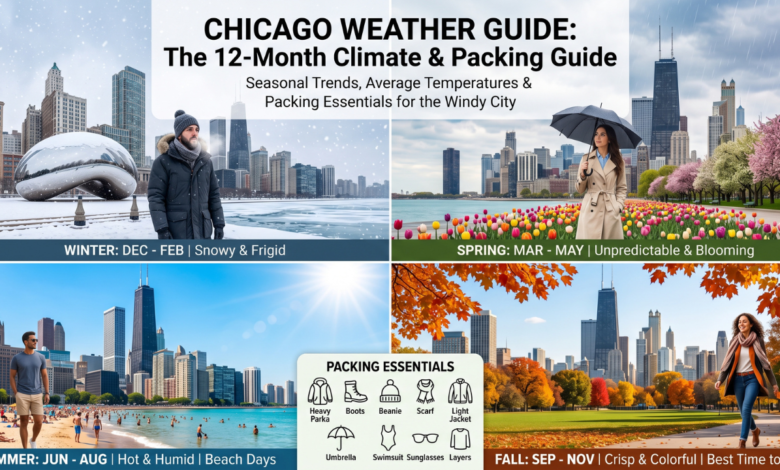
Understanding Chicago weather is the first and most important step when planning a trip or a move to the Midwest’s largest metropolis. Situated right on the southwestern shore of Lake Michigan, Chicago is famous for its dramatically changing seasons, stunning summer days, and notoriously biting winters. Because the city experiences a humid continental climate, residents and visitors alike get to enjoy four distinct seasons, each offering a completely unique experience of the city.
Adapting to Chicago weather means preparing for the unpredictable. There are no mountains to block weather systems moving across the plains, meaning a sunny, mild morning can quickly shift into a chilly, breezy afternoon.
Whether you are wondering if you need a heavy winter parka in November, or checking the Chicago weather forecast to see if July is too hot for a walking tour, knowing what to expect is crucial. This comprehensive guide breaks down everything you need to know about the city’s climate, average monthly conditions, and exactly what to pack so you are comfortable no matter when you arrive.
Understanding Chicago Weather Patterns and Climate
Geographically, Chicago is far enough north to experience frigid winters, but central enough to endure hot, humid summers. Because of its location, the city is frequently subjected to rapid temperature changes and sweeping storm fronts coming from the west and north.
The Lake Michigan Effect: “Cooler by the Lake”
You cannot talk about Chicago weather without talking about Lake Michigan. The lake acts as a massive thermal reservoir that heavily influences the local microclimate. If you watch a local broadcast, you will frequently hear meteorologists use the phrase “cooler by the lake.”
In the spring and summer, the water in Lake Michigan is much cooler than the surrounding air. When the wind blows in from the east (off the water), it acts as a natural air conditioner. This breeze drops temperatures along the shoreline—where downtown and the popular beaches are located—by as much as 10 to 15 degrees Fahrenheit compared to the western suburbs.
Conversely, in the late fall and early winter, the lake retains heat from the summer. During this time, the shoreline can actually be slightly warmer than inland areas. However, as winter sets in, the moisture off the lake can also generate “lake-effect snow,” localized bands of heavy snowfall that can blanket the city.
Is it Really the “Windy City” Because of the Weather?
While Chicago is famously known as the “Windy City,” the nickname actually has historical political origins, coined by 19th-century journalists mocking the city’s “windbag” politicians.
Meteorologically speaking, Chicago is breezy, but it isn’t even in the top 10 windiest cities in the United States. That said, the wind off Lake Michigan is very real. When a harsh winter gust funnels through the skyscraper canyons of the downtown Loop, it certainly feels like the windiest place on earth.
Chicago Weather by Season
To truly prepare for a visit, you need to understand the personality of each of Chicago’s four distinct seasons.
Spring (March – May): Unpredictable and Blooming
When it comes to spring, Chicago weather is a highly unpredictable transitional season. March can easily bring heavy snowstorms, while by late May, the city begins to feel like summer.
Early spring is characterized by wild temperature swings. You might experience a 65°F (18°C) sunny afternoon followed by a 30°F (-1°C) snowy morning the very next day. Rain is frequent, particularly in April and May, as warm air from the south clashes with lingering cold air from the north. However, as the tulips bloom along Michigan Avenue in May, the city wakes up from its winter hibernation, making late spring a beautiful time to explore.
Summer (June – August): Hot, Humid, and Festive
Summer is when Chicago truly shines. After enduring the long winter, locals flock outside to the beaches, rooftop bars, and outdoor street festivals.
Summer Chicago weather is generally hot and humid. Average highs sit in the 80s (27°C to 32°C), but it is common to have several days that push into the 90s (32°C+). The humidity can make the air feel much hotter than the thermometer reads. July and August are the peak summer months. Thunderstorms are common in the late afternoons and evenings, bringing heavy but brief downpours that clear the humidity from the air.
Fall (September – November): Crisp and Comfortable
Many locals argue that fall brings the absolute best Chicago weather. September retains the warmth of summer but loses the oppressive humidity. By October, the air turns crisp, the leaves change color, and temperatures settle comfortably into the 50s and 60s (10°C to 20°C).
Fall is generally drier than spring, offering clear, sunny skies perfect for walking the lakefront trail or visiting Navy Pier. November marks the sharp decline into winter; the wind picks up, trees lose their leaves, and the first flurries of snow usually arrive right around Thanksgiving.
Winter (December – February): Cold, Snowy, and Festive
Navigating Chicago weather in the winter requires serious preparation. The season is cold, often gray, and heavily influenced by wind chill. Average highs sit in the 30s (-1°C to 4°C), but low temperatures frequently drop into the teens or single digits.
Chicago also occasionally experiences the “Polar Vortex”—a large area of low pressure and cold air surrounding the Earth’s poles that can dip south, plunging the city into sub-zero temperatures (-20°C or lower) for several days. Snowfall is common, with the city averaging about 36 inches of snow per winter. Despite the cold, the city remains active with holiday markets, ice skating, and cozy indoor dining.
Average Chicago Weather and Temperatures by Month
To help you plan your itinerary, here is a breakdown of the historical average high and low temperatures, along with typical precipitation levels, by month. (Note: Temperatures are based on historical averages recorded at O’Hare International Airport).
What to Pack for Chicago Weather
Because Chicago weather can change rapidly within a single day, the golden rule of packing for the city is layering. Here is how to pack smartly based on the time of year you are visiting.
Packing for Summer (June – August)
Summer packing is relatively straightforward, but you must account for air conditioning and the lake breeze.
-
Light, breathable fabrics: T-shirts, shorts, summer dresses, and linen clothing.
-
Comfortable walking shoes: Chicago is a very walkable city.
-
A light jacket or sweater: Essential for the lakefront breeze in the evening or overly air-conditioned museums.
-
Rain gear: A compact umbrella for sudden afternoon thunderstorms.
-
Swimwear: If you plan on visiting North Avenue Beach or Oak Street Beach.
Packing for Winter (December – February)
Winter requires strategic packing to ensure you stay warm while exploring outdoors.
-
A heavy winter coat: A down parka or a high-quality, wind-resistant wool coat is an absolute necessity.
-
Wind-resistant accessories: A warm beanie, heavy gloves, and a thick scarf to protect your face from the wind.
-
Thermal base layers: Long underwear or fleece-lined leggings to wear under jeans or trousers.
-
Waterproof winter boots: Sidewalks can be snowy, slushy, and heavily salted. Good traction and waterproofing are vital.
-
Thick socks: Wool socks will keep your feet much warmer than cotton.
Packing for the Shoulder Seasons (Spring & Fall)
Spring and fall require the most versatile wardrobes, as you could experience three seasons in a single weekend.
-
Versatile layers: Long-sleeve t-shirts, flannels, cardigans, and light sweaters.
-
Medium-weight jacket: A denim jacket, leather jacket, or a fleece zip-up.
-
Water-resistant outerwear: Especially in April and May, a raincoat or trench coat is highly recommended.
-
Closed-toe shoes: Sneakers or ankle boots that can handle walking and occasional puddles.
The Best Time to Visit Based on the Climate
If your main priority is experiencing ideal Chicago weather, the best times to visit are September to October and May to June.
Early Fall (September/October): The climate is arguably perfect. The humidity of summer has broken, the skies are generally clear, and temperatures are warm enough to comfortably walk around the city all day in a light sweater. The fall foliage in the parks adds to the city’s beauty.
Late Spring/Early Summer (May/June): This is a fantastic time to see the city come alive. The outdoor dining patios open up, the lakefront trail fills with runners and bikers, and the climate is generally sunny and in the 70s (21°C+).
Summer (July/August): If you want the full “summertime Chi” experience—complete with Lollapalooza, beach days, and architectural boat tours at sunset—this is the time to go. Just be prepared for heat, humidity, and larger tourist crowds.
Winter (December): While January and February are generally reserved for hardy locals or business travelers, December is a magical time to visit if you don’t mind the cold. The Christkindlmarket, holiday window displays on State Street, and the Magnificent Mile Lights Festival make the freezing temperatures entirely worth it.
9. FAQ
How cold does Chicago actually get?
During the winter months of January and February, average lows are in the teens (around -8°C). However, factoring in wind chill or a Polar Vortex event, temperatures can occasionally drop to -10°F to -20°F (-23°C to -29°C) for brief, intense periods.
Does it rain a lot in Chicago?
Chicago receives moderate rainfall, averaging about 37 inches of precipitation annually. The rainiest months are usually April, May, and August. Rain often comes in the form of sudden, heavy thunderstorms rather than days of continuous drizzle.
How does Lake Michigan affect Chicago weather?
Lake Michigan holds onto cold temperatures from the winter much longer than the land does. In the spring and summer, winds blowing off this cold water onto the shoreline can drop air temperatures by 10 to 15 degrees in downtown Chicago compared to suburbs further inland.
Is Chicago humid in the summer?
Yes. Due to its location in the Midwest and proximity to Lake Michigan, Chicago experiences high humidity in July and August. This can make an 85°F (29°C) day feel like it is over 95°F (35°C).
What is the most unpredictable month for Chicago weather?
March and April are typically the most unpredictable and windiest months. The transition from winter to spring creates turbulent patterns, where you might see warm sunshine, heavy rain, and freezing snow all in the same week.